£17m Wheel Lathe Project at Clacton Depot Moves Closer to Completion
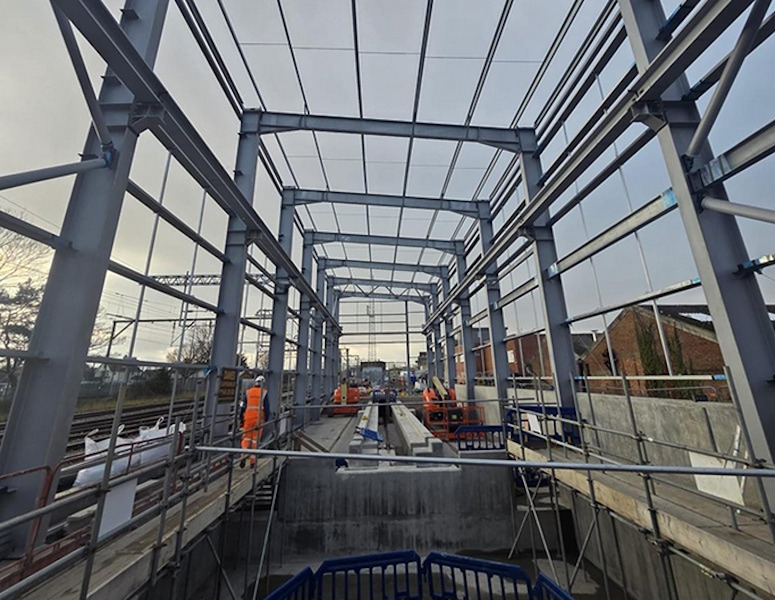

Work on Greater Anglia’s new wheel lathe facility at Clacton is advancing rapidly, delivered in partnership with Spencer Rail Engineering and backed by the Department for Transport.
The installation marks a significant upgrade in how the operator will maintain its trains. Wheel lathes are used to correct flat spots caused by everyday wear, restoring wheels to their correct profile. Each wheel is measured with precision equipment, the necessary material is removed, and the surface is re-profiled before being checked again to ensure it meets operational standards prior to re-entering service.
By February 2026, most underground elements of the scheme, including drainage, had been completed. Construction above ground is now well progressed, with the steel frame erected, servicing pits prepared for fit-out and roof cladding finished. Side cladding is continuing and is expected to make the structure watertight in the coming weeks.
The lathe unit itself has been manufactured by Hegenscheidt-MFD in Erkelenz, Germany, a company specialising in railway and automotive tooling. In parallel, a new stretch of track has been laid close to live passenger lines, requiring detailed coordination to avoid disruption to services and surrounding infrastructure.
The £17 million development, covering 5,000 square metres, remains on schedule for completion in summer 2026. Once operational, it will allow Greater Anglia to carry out wheel turning in-house for its entire fleet, including Class 745, Class 720 and Class 755 trains, strengthening operational resilience and performance.
Andrew Goodrum, Infrastructure & Major Projects Director, said:
"The installation of the new wheel lathe at the Clacton Depot is the first time that Greater Anglia has had its own permanent wheel lathe facility. Not only will this £17m investment into Clacton improve the performance and reliability of services in the region, but it will also provide many new, highly skilled jobs. Once complete, trains will be able to be serviced much quicker than before, allowing them to return to passenger service faster."
Image: Greater Anglia
Related Stories