Birmingham’s Giant HS2 Bridge Ready for Historic Launch Above Live Railway
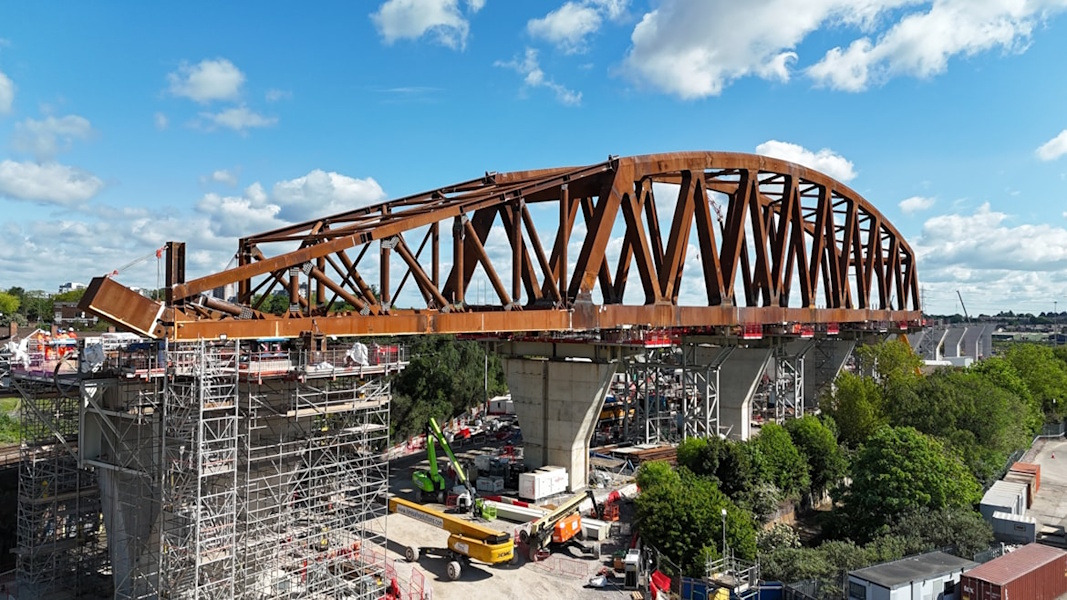

HS2 has reached another major construction milestone after engineers completed work on Curzon 2, set to become the tallest bridge anywhere on Britain’s new high-speed railway network. Final inspections are now being carried out before the giant structure is moved into place above the Cross City railway line on the outskirts of Birmingham city centre.
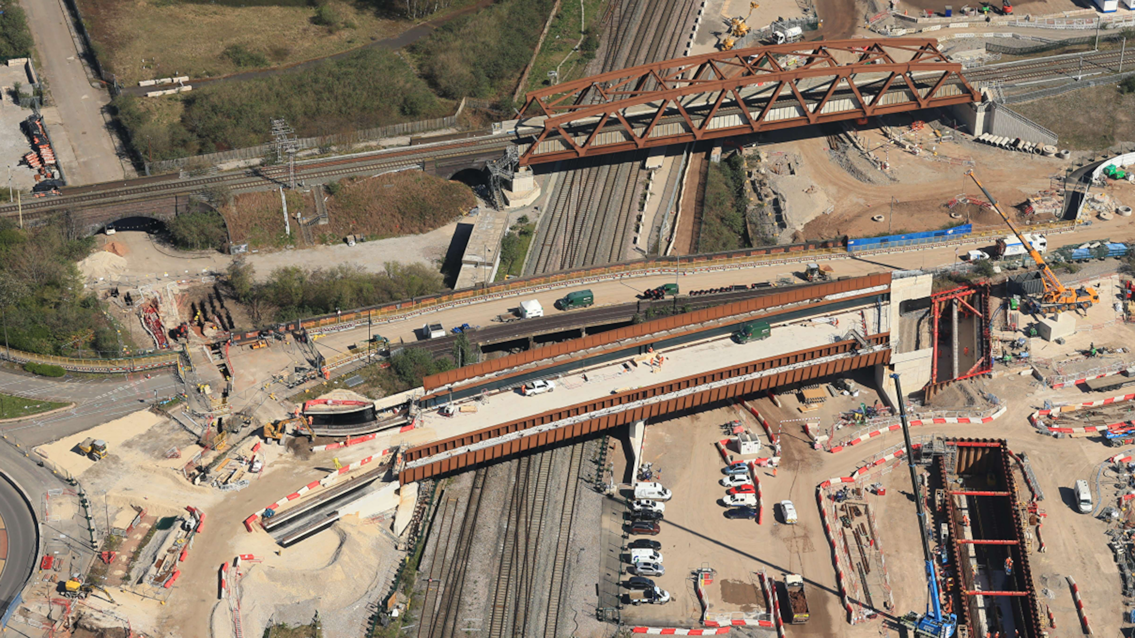
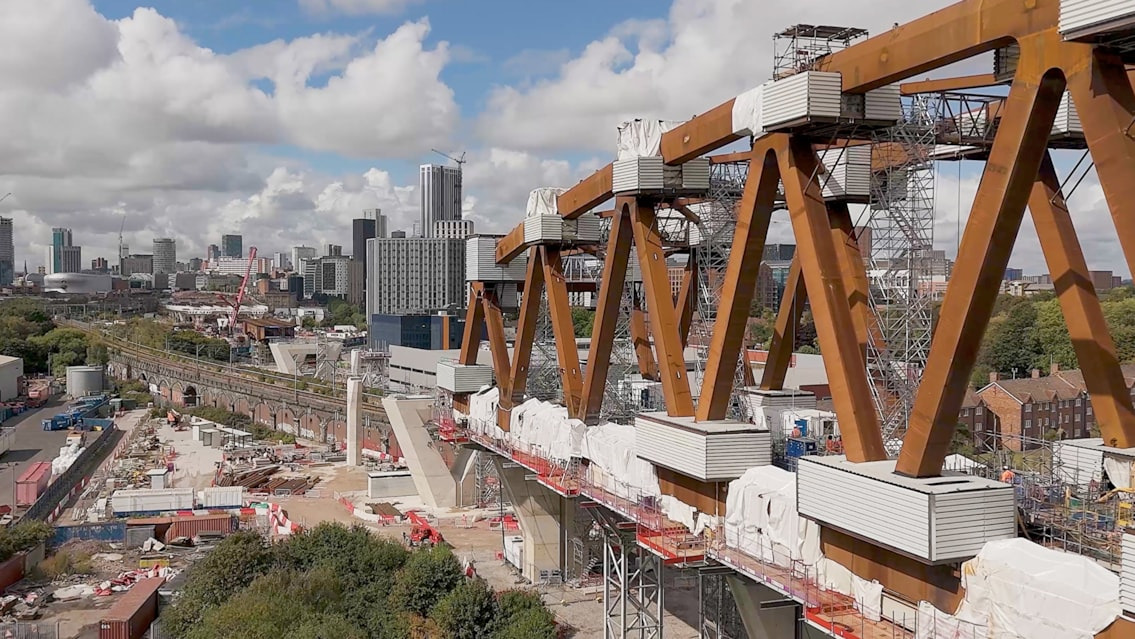
The bridge forms part of the Curzon approaches, a series of five viaducts that will carry trains into the future Curzon Street Station. Standing out against Birmingham’s skyline, the bridge features a 24-metre-high steel truss built from 670 individual steel sections welded together into triangular units. Engineers used weathering steel for the project, a material designed to naturally darken as it ages.
Once fully installed, the highest point of the bridge will rise to more than 40 metres above ground level, roughly the height of a 10-storey building. The 4,200-tonne structure will sit above an existing Victorian railway viaduct that already stands around 17 metres high.
Greg Sugden, HS2’s Head of Delivery for the Curzon approaches, said:
“Curzon 2 is designed to reflect Birmingham’s proud industrial heritage, and it will soon become a recognisable landmark on the cityscape – just like the Rotunda and the BT Tower. I’m immensely proud of the civil engineers, welders and apprentices that have each played a part in its construction and we stand ready for the final challenge – launching the bridge over the adjacent railway line.”
Construction of the bridge has involved around 250 engineers working for HS2 contractor Balfour Beatty VINCI over the last three years. Ground preparation works began in 2023 when 32 permanent piles, each extending roughly 30 metres into the ground, were installed to reinforce the site. During 2024, crews assembled the 150-metre deck using more than 500 separate components lifted into place by crane across the neighbouring Curzon 1 viaduct.
The restricted location of the build added major engineering difficulties. Positioned between the River Rea and operational railway infrastructure, the site left little room for manoeuvre. Massive cranes weighing up to 650 tonnes were brought in to lift steel sections while welders worked at height around the clock inside specially fabricated enclosures designed to protect them from strong winds and poor weather.
The completed structure will now undergo a complex three-stage launch process. Using hydraulic jacking systems, the bridge will be slid 180 metres into its final position where it will rest on four concrete piers spanning the Birmingham to Lichfield railway line.
Onder Akin, Senior Project Manager for Balfour Beatty VINCI, said:
“This has been an incredible challenge and I’m extremely proud of the team who worked around the clock, in all weather conditions, to complete this magnificent structure. We are now preparing for the final stages, when the 4,200-tonne steel truss will be moved into position using high-precision hydraulic strand jacks. The structure will slide carefully into place over temporary bearings in a controlled operation.”
The first stage of the launch will see the bridge pushed 50 metres towards the railway boundary during overnight operations to avoid disrupting passenger services. A further 93-metre movement will then take place during a planned closure of the Cross City line between Birmingham New Street and Lichfield Trent Valley from Friday 29 May to Sunday 31 May 2026. The final 37-metre push will lock the bridge securely into position.
HS2, alongside Balfour Beatty VINCI, has been working with Network Rail and West Midlands Trains to manage the operation and minimise disruption while progress continues on the viaduct network leading into Birmingham’s new high-speed terminus.
Image: HS2
Related Stories