Why Wrexham & Shropshire Is Still Remembered Fondly

Wrexham & Shropshire was one of the shortest-lived but most fondly remembered train operators of the modern British railway. It did not have a vast network, a famous inter-city brand or decades in which to establish itself. Instead, it offered something simple and unusual: a direct, high-quality open-access service between Wrexham General and London Marylebone, linking North Wales, Shropshire, the West Midlands and the capital without requiring passengers to change trains. It ran for less than three years, but its reputation lasted far longer than its timetable.
The service began in April 2008 under the full legal name Wrexham, Shropshire & Marylebone Railway Company Limited. It was an open-access operator, meaning it was not a conventional franchise and did not run under the same model as the main government-contracted operators. Instead, it applied for the right to operate over the national network and had to survive commercially from the traffic it could attract. That made Wrexham & Shropshire both ambitious and vulnerable from the start.
The basic idea was attractive. Wrexham, Shrewsbury and parts of Shropshire had long lacked the kind of direct London service that many passengers felt they deserved. The operator offered a route from Wrexham General to London Marylebone via stations including Ruabon, Chirk, Gobowen, Shrewsbury, Wellington, Telford Central, Cosford, Wolverhampton, Tame Bridge Parkway and Banbury. It gave several communities a direct link to London that was more comfortable and more distinctive than many expected from a small open-access company.
Marylebone was central to the identity of the service. Rather than using Euston, the traditional London terminus for West Coast services, Wrexham & Shropshire ran over the Chiltern route into London Marylebone. That gave the operation a different character, with a quieter London terminal and a route that avoided the busiest parts of the West Coast Main Line south of Birmingham. It also meant longer journey times than a more direct Euston service might have offered, but the operator tried to compensate with comfort, service quality and reliability.
Access restrictions around the West Midlands were one of the defining complications. The company’s services used routes through or around the Birmingham area, but competition protections meant it could not freely tap into the major Birmingham and Coventry markets in the way a conventional long-distance operator might. For a business that needed passengers, that mattered. It limited the commercial value of running through one of Britain’s largest rail markets and made the company more dependent on the smaller communities that formed the core of its route.
Virgin Trains also became part of the story in a more direct way. The West Coast operator opposed aspects of the open-access proposal, and wider competition protections around the West Coast franchise shaped what Wrexham & Shropshire could and could not do. Then, in 2008, Virgin introduced its own Wrexham General to London Euston service, running via Chester and Crewe with Class 221 Super Voyagers. That gave Wrexham a faster direct link to London than the Marylebone route, although it did not serve Shropshire and the West Midlands communities that were central to Wrexham & Shropshire’s purpose. Even so, it added another commercial pressure on a new operator already trying to build passenger numbers.
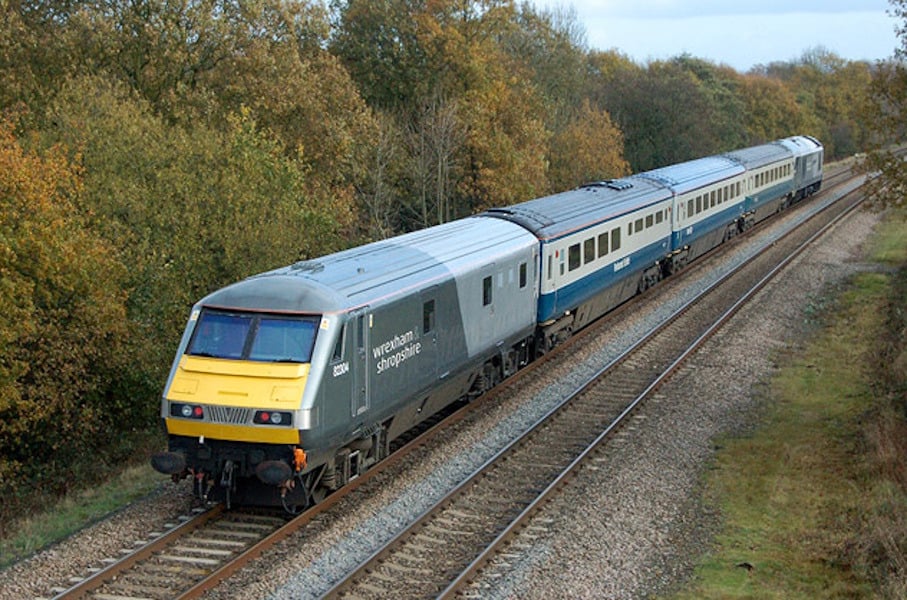
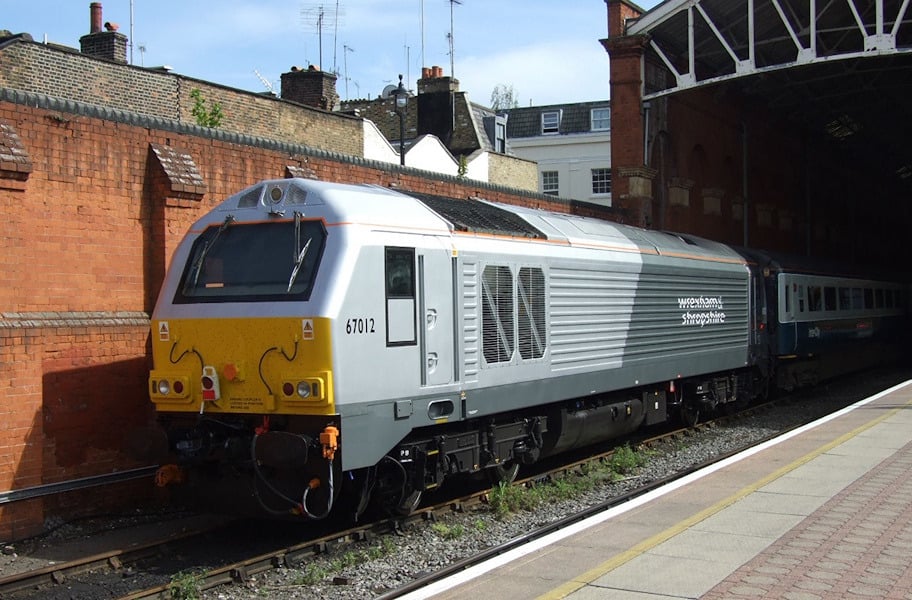
The rolling stock helped make the service feel special. Wrexham & Shropshire used Class 67 diesel locomotives with Mark 3 coaches and Driving Van Trailers, giving the trains a proper locomotive-hauled inter-city character. At a time when much of the network was moving further towards multiple units, the sight of a Class 67-led set in the operator’s silver, grey and red livery stood out. The Mark 3 coaches gave passengers a level of comfort associated with established long-distance services, while the Driving Van Trailer allowed push-pull operation without turning the locomotive.
The onboard offer became one of the operator’s strongest selling points. Wrexham & Shropshire developed a reputation for friendly staff, good customer service and a more personal style of travel. It was not trying to compete only on journey time. It was trying to make the journey itself feel better. Passengers remembered the space, the atmosphere and the sense that the company cared about the service it was providing. That reputation became a major part of why the operator is still discussed warmly today.
The service also had symbolic value. For Wrexham and Shropshire, it restored a direct London link and gave places outside the main inter-city map a sense of railway importance. Direct trains to the capital are about more than convenience. They can affect how a town sees itself, how businesses view connectivity and how passengers feel about their place on the network. Wrexham & Shropshire understood that emotional and practical value, and its branding leaned into the idea of giving underserved places a better deal.
Yet the economics were difficult from the beginning. Open access can offer freedom, but it also removes many of the protections that come with a larger contracted operation. Wrexham & Shropshire had to cover its costs from fares on a relatively limited service pattern, using a route that was not the fastest available and serving markets where demand had to be built rather than simply inherited. The financial crisis, recession-era travel conditions, competition and access restrictions all made that challenge harder. Business travel weakened, discretionary journeys came under pressure, and the operator had little margin for error.
The timetable was adjusted as the company tried to improve its position. The original ambition of several daily trains each way was reduced over time, with service cuts made as the operator attempted to limit losses. Those reductions made commercial sense on paper, but they also risked making the service less useful. A direct train is attractive, but if it runs too infrequently or at times that do not suit enough people, passengers may still choose other options. Wrexham & Shropshire found itself caught between quality and scale.
Ownership and industry relationships added another layer. The company was associated with Laing Rail and later became part of the wider Deutsche Bahn and Arriva structure after corporate changes. It also had links with Chiltern Railways, which gave it operational expertise and a route into Marylebone. Those connections helped the service function professionally, but they did not remove the fundamental problem: the trains still needed enough paying passengers to justify the operation.
In January 2011, Wrexham & Shropshire announced that it would cease running. The company said a review had concluded there was no prospect of the business becoming profitable. The final day of operation was 28 January 2011, with the last train running from London Marylebone to Wrexham General. The closure was not caused by a lack of affection. It was caused by a lack of sustainable economics. That distinction is important, because it explains why the operator’s reputation survived even though the business did not.
The end of Wrexham & Shropshire left a gap that was felt strongly by its regular passengers. Advance tickets were accepted on alternative operators, staff were supported where possible, and the rolling stock went on to other uses, but the service itself was gone. For Wrexham and Shropshire, the loss was about more than one timetable. It removed a direct, distinctive route to London and brought back the familiar need for changes or less convenient journey options.
The operator’s legacy is unusually positive for a failed rail business. Many operators that close are remembered for poor performance, weak branding or customer frustration. Wrexham & Shropshire is remembered differently. It is often cited as an example of a railway company that delivered a good passenger experience but could not overcome the financial realities around it. That makes it a useful case study in the difference between customer satisfaction and commercial viability.
It also shows the limits of open access. The model can create new links, test new markets and offer passengers more choice, but it cannot escape basic railway economics. Paths, restrictions, rolling stock costs, staffing, fuel, maintenance, terminal access, marketing and competition all have to be dealt with. A service may be loved, but if it is too lightly used or too expensive to operate, affection alone cannot keep it running. Wrexham & Shropshire proved that open access can produce quality, but also that quality does not guarantee survival.
The story remains relevant because the desire for better links between North Wales, Shropshire, the Midlands and London has not gone away. Later proposals for new open-access services over similar broad territory show that the market is still seen as worth exploring. The details may differ, with different routes, terminals and rolling stock, but the underlying idea is familiar: communities outside the strongest inter-city corridors still want direct, comfortable and credible links to the capital.
Wrexham & Shropshire lasted less than three years, but it made a lasting impression because it felt like a railway service designed around passengers rather than only around operational convenience. Its trains were distinctive, its staff were well regarded, and its offer was easy to understand. It gave Wrexham and Shropshire a direct London service that many people still remember with affection. Its failure was commercial, not emotional. That is why, more than a decade later, it remains one of the open-access operators passengers still miss.
Image(s): Trevor Tupper & Andy F
Related Stories