A Decade on the Rails: Hitachi Celebrates 10 Years of Transforming Scotland’s Trains

Hitachi Rail is marking ten years of operations in Scotland in 2026, celebrating a long-running partnership with ScotRail, Transport Scotland and Network Rail that the company says has helped deliver strong reliability, major emissions reductions and sustained investment in rail infrastructure and skills.
The company first entered Scotland’s rail market in 2016, a move that coincided with the introduction of two key train fleets: LNER’s Azuma trains and ScotRail’s Class 385 electric units. Both fleets are built in Britain and have played an important role in improving rail connectivity and reliability across the country. Hitachi Rail now employs around 300 staff in Scotland, with its main operational presence centred on its Glasgow headquarters and the Edinburgh Craigentinny depot.
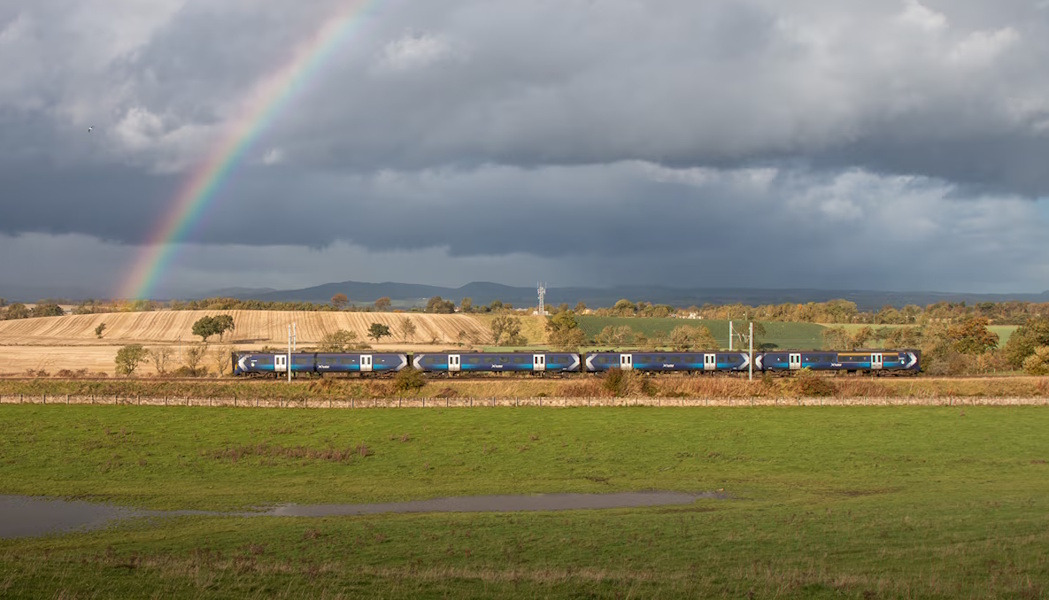
The ScotRail Express fleet, formed of Class 385 trains operating across Scotland’s Central Belt, has become one of the best-performing suburban fleets in the UK. The trains are reported to be four times more reliable than the national industry average for fleets of more than 50 units. Passenger use has also remained strong, with 7.8 million journeys recorded on Class 385 services between Edinburgh and Glasgow during the 2024–25 period, a five per cent increase on the previous year. As a fully electric fleet, the trains have also played a major role in reducing emissions on the Glasgow to Edinburgh route, cutting carbon output by 82 per cent compared with the diesel trains they replaced.
Beyond train operations, Hitachi Rail has invested heavily in infrastructure and workforce development. One major project has been a £30 million modernisation of the 122-year-old Craigentinny depot in Edinburgh. The facility now serves as a key maintenance hub for Scotland’s railway, supporting six separate train fleets. Its workforce has also undergone significant digital upskilling over the past decade, helping position the depot as a centre for Hitachi’s digital maintenance capabilities in the UK.
The company has also been involved in education and community programmes aimed at encouraging young people to consider careers in engineering and rail. Through its partnership with the Powering Futures initiative, Hitachi Rail staff volunteer at Portobello High School to support STEM education and real-world engineering problem solving. Meanwhile, the Rail Safe Friendly programme is being delivered in ten nearby primary schools, providing rail safety education with plans to expand the initiative further this year.
Looking ahead, Hitachi Rail is expected to remain a central partner in Scotland’s rail sector into the 2030s after securing an extension to its maintenance contracts for the Class 385 fleet. The long-term agreement is expected to support further technological developments, including deeper integration of the company’s HMAX digital asset management platform and potential use of battery technology designed to encourage modal shift while reducing operating costs.
Kelly Warburton, UK Sales Director, Hitachi Rail said:
“For a decade, Hitachi Rail has been proud to support Scotland’s railway, investing in new technology and working hand-in-hand with ScotRail, Network Rail and Transport Scotland to help make the Class 385s one of Britain’s most reliable fleets. "Our long-term partnership means we never stop asking what’s next for Scotland’s railways. We are excited about the new battery and digital solutions we have been busy developing, which can help deliver even greater reliability, resilience and greener travel choices for passengers across Scotland.”
Tom Hawkesworth, CEO of Agility Trains said:
“For over ten years, Agility Trains has been a proud partner in Scotland’s rail success, investing significantly in the essential infrastructure – including depots in Edinburgh, Aberdeen, and Inverness - that keeps the nation moving. Our commitment to Scotland extends well into the coming decades. From continued investment in our iconic LNER Azuma fleet and train care facilities to pioneering new safety technologies like digital in-cab signalling, our goal is to provide Scottish communities with a high-quality, more dependable rail service. Together with our partners, we are ensuring that Scotland’s rail network is sustainable and technologically advanced for the years ahead".
Image: Hitachi Rail
Related Stories