Green Messaging Under Pressure: Lumo’s Electric Brand vs Diesel Reality

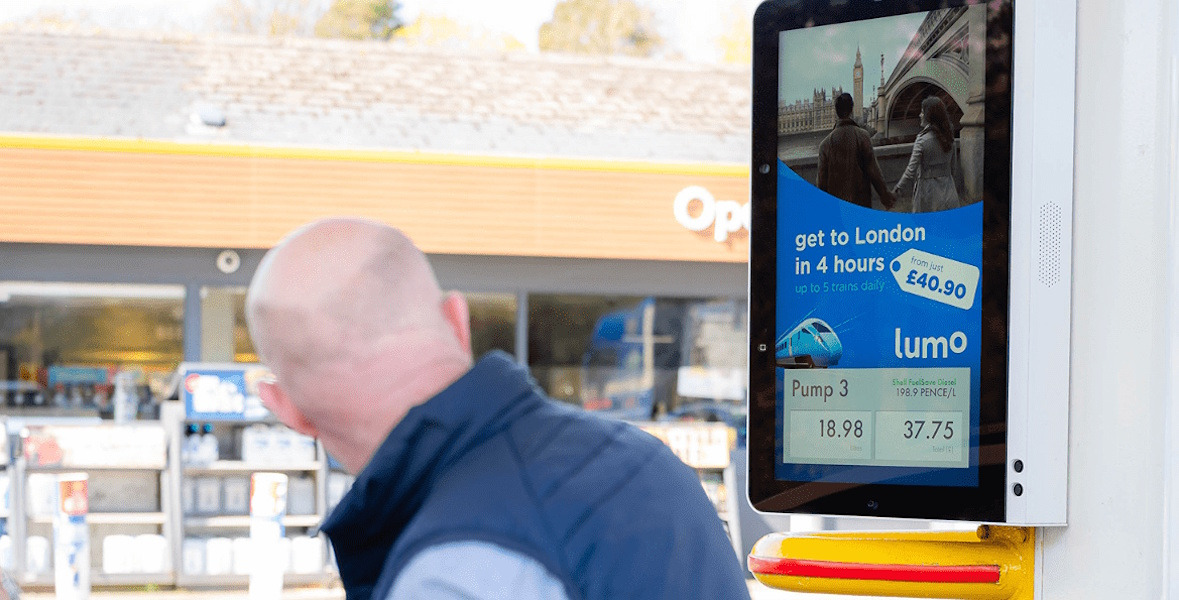
Lumo has launched a new marketing initiative aimed at persuading motorists to switch to rail, placing live train information and ticket prices on digital screens at petrol stations. The campaign, developed in partnership with Smart Outdoor, targets drivers at the point of refuelling, presenting rail as a greener and often more cost-effective alternative. Central to the messaging is Lumo’s description of itself as an “all-electric” operator, a claim it has used consistently since launching services on the East Coast Main Line.
At face value, the campaign reflects a wider push to encourage modal shift, with rail positioned as a lower-emission alternative to private car travel. By placing real-time departure information and fares directly in front of motorists, Lumo is attempting to influence decisions at a critical moment. The environmental message is clear and, in the context of its current operations, broadly accurate—its existing services are indeed operated using electric trains.
However, the clarity of that message begins to blur when future plans are considered. Lumo is preparing to expand onto the West Coast Main Line, where services are currently expected to launch using diesel-powered trains on an interim basis. This is despite the route itself being fully electrified. While the use of diesel traction may be temporary, it introduces a disconnect between how the operator presents itself and how some of its services are likely to be delivered.
That tension is particularly relevant in the context of this campaign. The advertising appears to be focused on Lumo’s existing East Coast operation, yet it promotes the company more broadly as an “all-electric” railway without qualification. For passengers unfamiliar with the detail, there is little to indicate that this description may not apply across all future services. As a result, a message that is currently accurate risks becoming outdated or misleading as the company expands.
This raises a wider question about transparency in rail marketing. If an operator builds its identity around environmental credentials, there is a strong argument that any deviation from that standard—temporary or otherwise—should be clearly communicated. Without that clarity, there is a risk that branding oversimplifies a more complex operational reality, particularly at a time when passengers are increasingly conscious of sustainability.
None of this undermines the broader case for rail as a greener mode of transport. Even diesel-operated trains typically produce lower emissions per passenger than private cars. But the contrast between Lumo’s current branding and its future operational plans highlights the importance of consistency. If the railway is to maintain credibility in its environmental messaging, it must ensure that what it promises aligns closely with what it delivers—not just today, but in the near future as well.
Image: Lumo
Related Stories