Safety Breaches Exposed in Port Glasgow Rail Incident Investigation
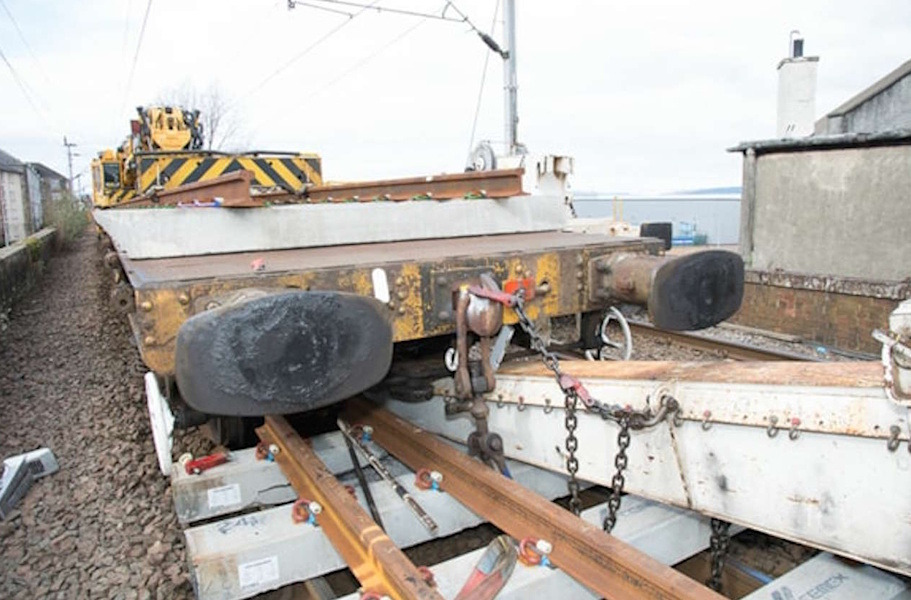

A rail safety investigation has detailed how two track workers were struck by a wagon during engineering works near Port Glasgow railway station, leaving one seriously injured.
The incident occurred at around 8.30pm on 15 March 2025 within a planned engineering possession, where multiple rail-mounted cranes were being used to renew a section of track. A wagon being propelled by one of the cranes struck the workers as they stood on the line. One individual became trapped between the wagon and a lifting beam, sustaining serious injuries, while a second worker was also trapped beneath the wagon and suffered minor injuries.
Investigators found that another crane had placed a section of track ahead of the moving wagon. The two workers were positioned nearby discussing its placement when the vehicle approached. Although a stop instruction was issued over the radio by the person controlling the movement, it was not received by the crane driver, and those on the track did not realise the machine had continued moving.
The Rail Accident Investigation Branch determined that the crane operator did not have a direct line of sight and was fully reliant on radio communication from ground staff. The absence of lighting on the leading end of the wagon also meant there was no visual warning of its approach, despite requirements set out in the Rule Book.
Further findings pointed to wider issues with communication systems. RAIB identified that standards requiring the use of approved duplex communication equipment were not being consistently followed, and that there were no effective assurance processes in place to monitor compliance. It also found that certain operational rules relevant to rail cranes were not being recognised or applied.
As a result, RAIB has issued a recommendation to Swietelsky Construction, calling for a review of communication equipment and procedures used when controlling crane movements, aligned with Network Rail standards. The recommendation has also been highlighted to other operators undertaking similar work.
Two additional recommendations have been made to Network Rail. These focus on reviewing standards governing radio communications for on-track machinery, and strengthening assurance processes to ensure compliance with safety requirements.
The investigation also identified three key learning points, including the importance of staff only beginning work after receiving a briefing from a Controller of Site Safety (COSS), ensuring appropriate lighting is fitted to wagons within possessions, and maintaining strict adherence to safety-critical communication procedures.
Image: RAIB
Related Stories