
Settle to Carlisle: The Route That Refused To Die

The Settle–Carlisle line is one of the most famous railways in Britain, not simply because of its scenery, but because of what it represents. Running across some of the most dramatic upland landscape in England, the route links Settle in North Yorkshire with Carlisle in Cumbria, passing through the Yorkshire Dales and the North Pennines on its way north. It is a working railway, a tourist attraction, an engineering landmark and one of the great survival stories of the British rail network.
The line was built by the Midland Railway and opened to passenger traffic in 1876. Its purpose was not originally romantic or scenic. The Midland wanted a route to Scotland that it could control, rather than relying on agreements with rival companies. That commercial ambition produced a railway through extremely difficult country, with high moorland, deep valleys, exposed weather and major civil engineering challenges. What later generations would see as beauty was, for the builders, a serious obstacle.
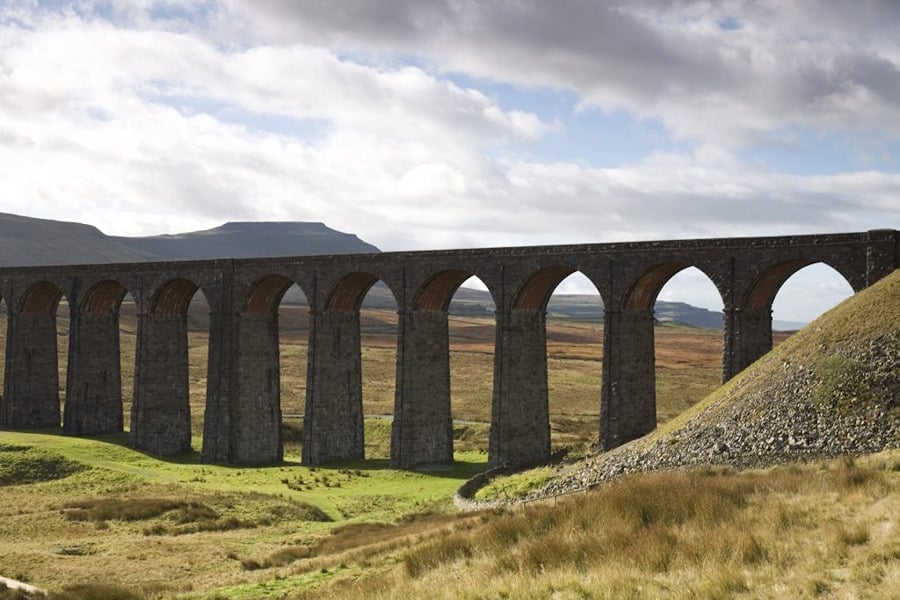
The engineering remains central to the line’s identity. Ribblehead Viaduct is the best-known structure, carrying the railway across Batty Moss with 24 arches over a length of roughly 400 metres. It has become one of the defining images of British railway architecture, but it is only part of the story. The Settle–Carlisle route also includes tunnels, other viaducts, embankments, cuttings and remote stations that show the scale of the original undertaking. This was not a light rural branch line. It was a main line built with the ambition and confidence of the Victorian railway age.
That construction came at a heavy human cost. Thousands of navvies worked on the route, often living in temporary camps in harsh and isolated conditions. Accidents, disease and severe weather all took their toll. The railway that later became known for postcard views and steam specials was created through difficult, dangerous labour. That matters because the Settle–Carlisle line is often treated as a scenic experience first and an industrial achievement second, when in reality it is both.
For much of its life, the line carried a mix of passenger and freight traffic. It formed part of a wider network of routes linking Yorkshire, the Midlands and Scotland, and it had value not just for the communities along the line but also for longer-distance movements. However, changing traffic patterns, rationalisation and the growing importance of other main lines gradually weakened its position. By the second half of the 20th century, the Settle–Carlisle was increasingly vulnerable to the argument that it was expensive to maintain and no longer essential.
The most serious threat came in the 1980s. British Rail sought to close the line, citing low traffic and the high cost of repairing major structures, including Ribblehead Viaduct. By then, the route had suffered from underinvestment, and its physical condition became part of the case against it. To supporters, however, that was precisely the problem: a railway neglected over time was then being judged on the consequences of that neglect. The closure proposal turned the Settle–Carlisle from a remote railway into a national cause.
The campaign to save it became one of the most celebrated railway campaigns in modern Britain. The Friends of the Settle–Carlisle Line was formed in the early 1980s and helped build public, political and media support for the route. Campaigners argued that British Rail had underestimated the line’s potential, not only for local travel but also for tourism, diversions and freight. They also challenged the idea that the railway was simply a costly rural leftover. The Settle–Carlisle was presented instead as a main line with a future, if it was properly maintained and promoted.
That argument eventually won. In 1989, consent for closure was refused, saving the route from what could have been a permanent loss. It was a turning point not only for the line itself but also for wider attitudes towards railway closures. Michael Portillo, then a transport minister, signed the letter confirming that the line would not close, and his name has remained closely associated with the route’s reprieve. The decision showed that a railway could be more valuable than its immediate balance sheet suggested, and that public campaigning could change the fate of a line that had once appeared doomed.
Since then, the Settle–Carlisle has become a very different story. Stations and structures have been restored, visitor interest has grown, and the line has developed a strong identity as one of Britain’s great railway journeys. Ribblehead, once central to the closure argument because of repair costs, is now one of the route’s greatest assets. The viaduct has become a symbol of endurance: an expensive Victorian structure that was nearly used as a reason to close the line, but which now helps attract people to it.
The route’s modern role is easy to misunderstand. It is not a heritage railway, even though heritage and charter trains are a visible part of its appeal. It remains part of the national rail network and carries regular passenger services. For some users, it is a scenic day out. For others, it is a practical link to school, work, college, shopping or onward rail connections. That mixture is important. The line survives because it is more than a museum piece; it still performs a transport function.
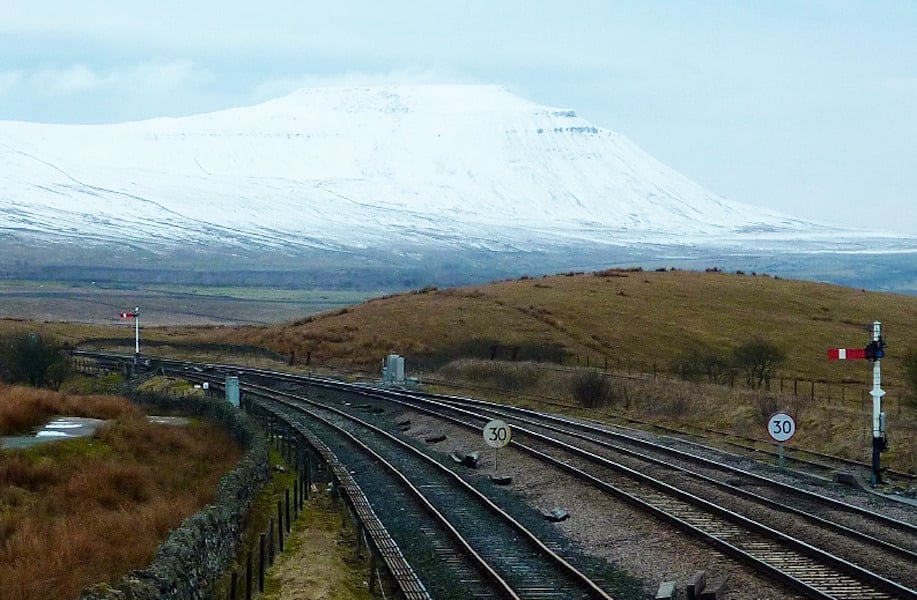
Its landscape also gives it a character few British main lines can match. Trains climb through exposed country, pass remote stations and cross open moorland where the railway feels unusually far from towns and roads. Places such as Horton-in-Ribblesdale, Ribblehead, Dent, Garsdale, Kirkby Stephen and Appleby give the line a rhythm unlike a conventional inter-city route. The journey is not defined by speed, but by geography, engineering and atmosphere. That makes it attractive to walkers, photographers, railway enthusiasts and ordinary passengers who simply want a memorable trip.
Investment has not stopped either. A line that was once presented as too costly to save is still seeing money spent on keeping it relevant for modern passengers. Horton-in-Ribblesdale station, close to Pen-y-Ghent and the Yorkshire Three Peaks route, has recently received a major accessibility and safety upgrade. The scheme delivered a new footbridge and two lifts, giving step-free access to both platforms and replacing the need for passengers and walkers to cross the tracks by a foot crossing. It is a useful reminder that the Settle–Carlisle is not simply being admired from a distance; it is still being adapted for the people who use it now.
Freight and diversionary potential have also remained part of the wider argument for the line. The Settle–Carlisle has long been valued as an alternative route when other north–south corridors are disrupted, particularly because Britain’s rail network has limited spare capacity in many places. It is not the fastest way between England and Scotland, but resilience matters. A railway that looks marginal in quiet times can become valuable when the wider network is under pressure.
The line also benefits from something that many railways struggle to build: a public identity. People know the Settle–Carlisle. They may know it for Ribblehead Viaduct, for steam trains, for the 1980s closure battle, for Michael Portillo’s later association with railway broadcasting, or for the scenery across the Pennines. That recognition gives it a cultural importance beyond the timetable. It is one of the few routes in Britain where the railway itself is the destination as much as the places it serves.
As a Railway in Focus subject, the Settle–Carlisle line shows why railway value cannot always be measured in a narrow way. It was built for commercial rivalry, nearly lost through decline and cost-cutting, then revived through public support, engineering work and a better understanding of what it could offer. Today it stands as a working route, a visitor attraction and a reminder that railway closures can remove more than trains. They can remove history, resilience, local connection and national character.
The Settle–Carlisle line refused to die because enough people recognised that it still mattered. Its survival was not inevitable, and that is what makes the story so powerful. Britain could have lost one of its greatest railway routes in the name of short-term savings. Instead, the line remains open, carrying passengers across viaducts, through tunnels and over some of the most spectacular railway landscape in the country. It is not just a scenic line. It is a railway survivor.
Image(s): Network Rail
Related Stories