Red, White And Blue Railway Reform: Symbolic Fresh Start Or Just Another Rebrand?

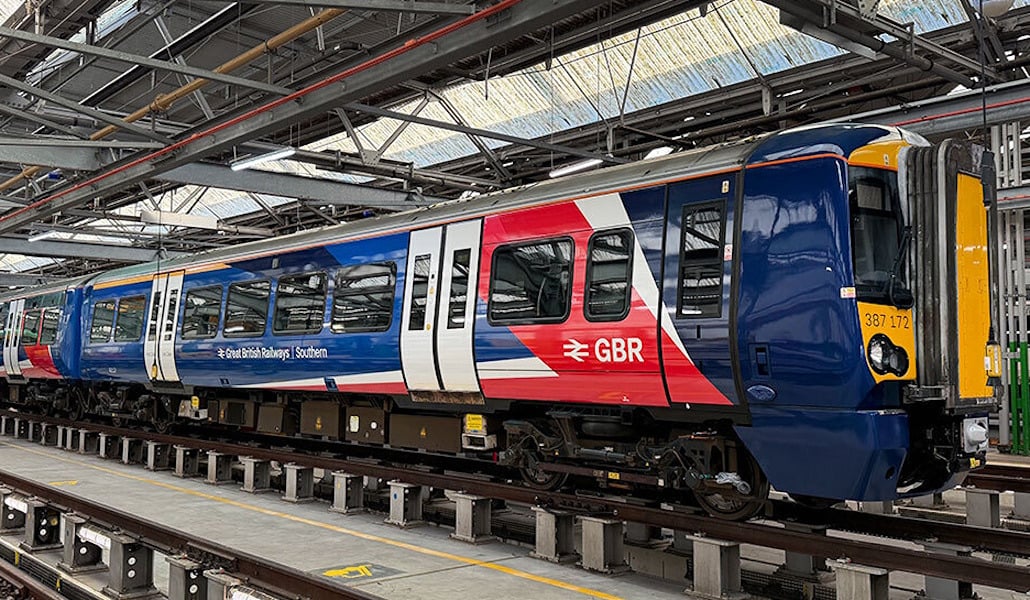
The first train carrying Great British Railways branding has been unveiled at Brighton, giving passengers their clearest visual sign yet of the government’s plan to reshape the railway under public ownership. The red, white and blue Class 387, operated by Southern, was launched ahead of Govia Thameslink Railway transferring into public ownership on 31 May 2026, when Thameslink, Great Northern, Southern and Gatwick Express services are due to join the publicly owned network. Ministers have presented the unveiling as a historic moment, but the reaction has already shown the risk of trying to sell railway reform through a paint scheme before passengers have felt the promised improvements.
The government insists this is not simply a cosmetic exercise. Transport Secretary Heidi Alexander said the Brighton unveiling made “the future of Britain’s railways a reality” and described it as a step towards a more joined-up, publicly owned railway that puts passengers first. The Department for Transport says the branding will be rolled out gradually across trains, stations and staff uniforms to limit unnecessary cost, while wider Great British Railways plans include a national ticketing app allowing passengers to check train times, buy tickets and book Passenger Assist in one place.
Yet the timing makes the launch politically sensitive. The railway has just endured another week of disruption, including signalling and communication problems, while passengers are still dealing with high fares, crowded services, cancellations, infrastructure failures and major weekend engineering work. Against that backdrop, a new livery risks becoming the most visible part of reform before passengers have felt the most important changes. For anyone who has been delayed, priced out or left confused by the current system, the question is not whether the train looks better. It is whether Great British Railways will make the railway work better.
Reaction among rail watchers and online commenters has been mixed. Some have welcomed the return of a clearer national identity and the use of the familiar double-arrow railway symbol, seeing it as a sign that the fragmented franchising era is finally giving way to something more coherent. Others have been far less impressed, with criticism focused on the bold Union flag-style colours and whether the design feels too political, too busy or too likely to date quickly. The livery has therefore become more than a design debate. It has become an early test of how the public responds to the visible face of rail reform.
That branding detail matters more than it first appears. The unit reportedly carries the wording “Great British Railways Southern”, suggesting that local or route identities may continue under the national brand rather than disappearing completely. That could be a pragmatic compromise, especially on a network where passengers still recognise names such as Southern, Thameslink, Great Northern and Gatwick Express. But it also raises a bigger question: if old operator identities remain visible, how much simpler will the railway actually feel to ordinary passengers?
There is also the issue of public trust. Britain’s railway has seen repeated rebrands, franchise changes, management contracts, emergency measures and public ownership transfers, but passengers tend to judge reform by service quality rather than structure. A train in new colours may signal a change in control, but it does not automatically fix staff shortages, infrastructure faults, confusing fares or poor disruption handling. If GBR is to mean anything beyond a national badge, passengers will need to see fewer cancellations, better information, simpler ticketing and more reliable day-to-day journeys.
The government’s argument is that public ownership is already delivering benefits. Its announcement says publicly owned Department for Transport operators are performing better on average for punctuality and cancellations than those still outside DfT Operator Limited ownership, and it points to the first rail fare freeze in three decades as evidence that passengers are starting to benefit. Those claims give ministers a platform, but they also raise the stakes. If the railway is now more directly accountable to government, then ministers will find it harder to blame private operators when things go wrong.
That may be the most important point hidden beneath the livery debate. Under the old system, responsibility could often feel scattered between train operators, Network Rail, the Department for Transport, rolling stock companies and contractors. Great British Railways is being sold as the answer to that fragmentation. But a more joined-up railway also means a clearer line of responsibility. If services fail under GBR, passengers will expect someone to own the failure, not simply explain it away through another set of industry acronyms.
The first GBR-branded train is therefore both a milestone and a risk. It gives the government a powerful image: a newly branded train, unveiled at Brighton, just before one of the country’s biggest operators moves into public ownership. But it also gives passengers something visible against which to judge the promise of reform. Every delayed, cancelled or overcrowded service carrying that branding will now carry a political message too. The paintwork says the railway is changing. The timetable, fares, reliability and passenger experience will decide whether that change is real.
For now, the Brighton unveiling marks the start of Great British Railways becoming visible to the public. Whether it becomes credible is a different question. A national livery can create recognition, and a single identity may eventually help simplify a fragmented system. But Britain’s railway does not need a successful branding exercise as much as it needs a successful operating railway. If GBR delivers that, the livery will become a symbol of reform. If it does not, it risks becoming a very public reminder that passengers were given new colours before they were given a better service.
Related Stories