How The InterCity 125 Changed British Rail Travel

The InterCity 125 is one of the most important trains in British railway history. Also known as the High Speed Train, or HST, it transformed long-distance travel from the mid-1970s onwards and gave British Rail a train that was fast, distinctive, comfortable and commercially powerful. At a time when the railway needed to modernise its image and compete more strongly with road and air travel, the HST delivered something that passengers could immediately understand: shorter journey times, better comfort and a sense that inter-city rail still had a future.
Its origins were pragmatic rather than glamorous. British Rail wanted higher speeds on existing main lines without waiting for widespread electrification or the more ambitious Advanced Passenger Train project. The result was a diesel train capable of 125mph in regular service, designed to work with the infrastructure already available. That made the InterCity 125 a practical answer to a very difficult problem. It did not require every route to be rebuilt from scratch, yet it offered a step-change in speed and presentation.
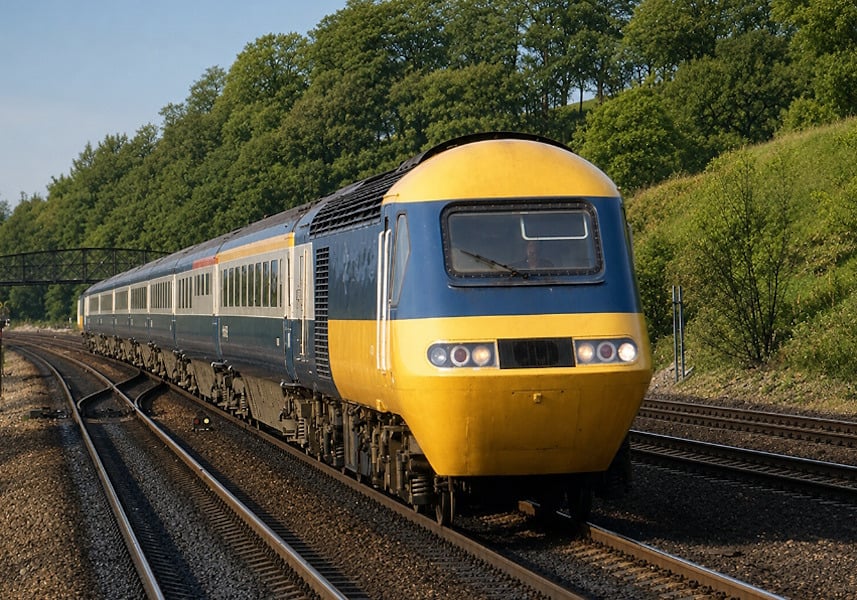
The production HST was built by British Rail Engineering Limited between 1975 and 1982. A typical set had a Class 43 power car at each end with a rake of Mark 3 coaches between them. This formation was one of the train’s great strengths. With power cars at both ends, the HST did not need to be turned at terminals, and the driving cab at each end gave it the operational flexibility of a fixed formation. The Mark 3 coaches were also a major part of the success, offering a smoother, quieter and more comfortable ride than much of what had gone before.
The look of the train mattered as well. The original blue, grey and yellow Inter-City 125 livery was bold and modern, with a sharply styled nose that made the train look fast even when standing still. Industrial designer Sir Kenneth Grange played a key role in shaping the distinctive front end, turning what could have been a purely functional power car into one of the most recognisable railway designs Britain has produced. The HST did not just improve the timetable; it improved the railway’s public image.
Passenger service began in 1976 on the Western Region, where the train quickly made its mark on routes from London Paddington towards Bristol, South Wales and the West Country. The effect was immediate. Journey times fell, capacity improved and British Rail had a product it could advertise with confidence. For passengers used to older locomotive-hauled stock or slower diesel services, the InterCity 125 felt like a clear move into a different era. It brought speed without the disruption of wholesale electrification.
The train’s impact soon spread. HSTs became associated with the East Coast Main Line, the Midland Main Line, CrossCountry services and other long-distance corridors. On the East Coast, they helped bridge the years before electrification and later worked alongside, and then gave way to, electric InterCity 225 sets. On the Great Western, they became part of the identity of the route for decades. On the Midland Main Line, they gave a non-electrified route a credible high-speed inter-city offer. Few trains have been so closely linked with so many different parts of the national network.
Speed was central to the HST’s appeal, but its success was not only about numbers. The 125mph maximum in normal service gave the train its name, yet the wider experience was just as important. The Mark 3 coaches were praised for their ride quality, and the train offered a level of comfort that helped make long-distance journeys feel more civilised. Large windows, stable running and a proper inter-city interior gave the HST a sense of occasion. It was fast, but it was also pleasant to travel on.
Reliability became another part of the legend. The HST was initially conceived as something of an interim answer while British Rail pursued more advanced high-speed technology, yet it became far more than a stopgap. Its basic concept proved robust, adaptable and long-lived. Power cars were re-engined, interiors were refurbished, doors were modified, and sets moved between operators and routes. The train’s ability to be updated kept it relevant for far longer than many would have expected when the first production sets entered traffic.
The HST also holds a special place in railway records. In 1987, it set a diesel train world speed record of 148mph, a mark that reinforced the engineering credibility behind the familiar passenger service. That achievement mattered because the InterCity 125 was not a one-off experimental machine hidden away from public use. It was a train thousands of people used in ordinary service. The same broad design that carried commuters, business travellers, families and holidaymakers was also capable of record-breaking performance.
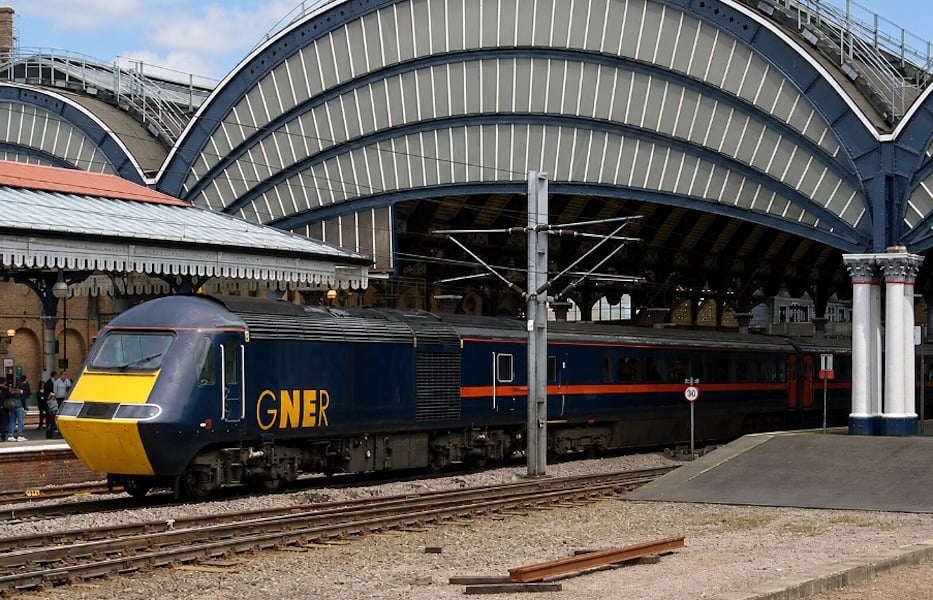
Privatisation gave the HST a second life in new colours. Operators including Great Western, GNER, Midland Mainline, East Midlands Trains, Virgin CrossCountry, CrossCountry, Grand Central and others used or adapted HSTs in different ways. Some sets retained a premium inter-city role, while others found work on routes where newer trains had not yet arrived or where extra capacity was needed. The train became a familiar survivor, changing liveries and interiors while retaining the essential shape and sound that made it instantly recognisable.
That longevity also meant the HST eventually became both loved and outdated. By the 2010s, many sets were still doing demanding daily work despite being based on a 1970s design. Newer bi-mode and electric trains began replacing them on major inter-city routes, particularly on the Great Western and East Coast main lines. The withdrawals were not just about age, but also about accessibility, emissions, maintenance costs and the need for modern onboard systems. Even so, the departure of HSTs from front-line routes felt significant because they had been part of railway life for so long.
The story has not ended entirely. Shortened HST sets continued in later years with operators including Great Western Railway and ScotRail, while Network Rail’s New Measurement Train used converted HST equipment for infrastructure monitoring. ScotRail has also confirmed plans to replace its Inter7City HSTs with refurbished Class 222 trains, with the last HST expected to be removed from service by December 2028. That means the type’s final chapter in regular passenger use is now in sight, but it has lasted far longer than most trains of its generation.
Preservation has become an important part of the HST story, and the role of the 125 Group deserves particular mention. Formed while the trains were still in everyday service, the group has helped ensure that the High Speed Train is treated not just as familiar rolling stock, but as a major part of railway history. Its work around power cars, Mark 3 vehicles, technical knowledge and public awareness has been central to keeping the story of the InterCity 125 alive beyond ordinary service. That matters because the HST is not a simple museum exhibit; it is a train whose significance lies in design, engineering, operation and the memories of millions of journeys.
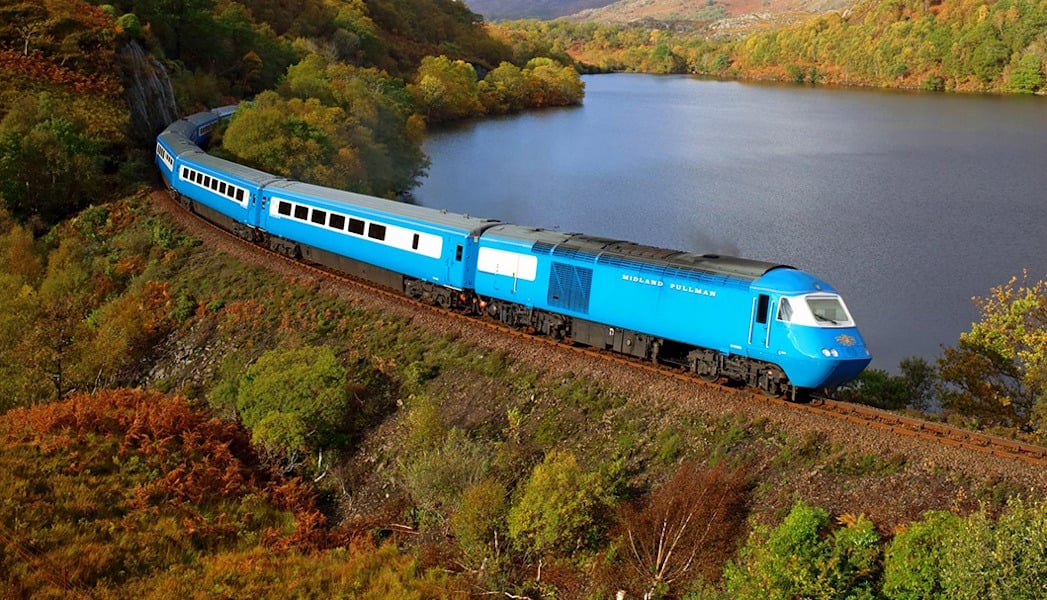
The Midland Pullman has also given the HST a very visible second life. Operated by Locomotive Services Limited, the luxury charter operation uses refurbished Class 43 power cars and Mark 3 coaches in a striking blue livery inspired by the original Blue Pullman tradition. It shows how adaptable the train remains, taking a design born for British Rail inter-city work and repurposing it for high-end railtour travel. For many passengers and enthusiasts, seeing a Class 43-led set still working on the main line underlines how strong the basic HST concept was.
That survival is not just nostalgia. The InterCity 125 represents a period when British Rail, often criticised for underfunding and compromise, produced a train that was genuinely world class. It was designed in Britain, built in Britain and proved itself across millions of miles of service. Its preservation, continued charter use and engineering afterlife all show that the HST has moved from everyday familiarity into railway heritage without losing its ability to feel purposeful.
The InterCity 125 changed what passengers expected from long-distance rail. It made speed feel normal, not experimental. It gave non-electrified routes a credible high-speed future and helped restore confidence in inter-city services at a difficult time for the railway. Its design was practical, its performance was proven, and its public identity was unusually strong.
The InterCity 125 was not perfect, and no train can stay modern forever. But few British trains have combined engineering, design, passenger appeal and longevity so successfully. It began as a practical solution to a national railway problem and became one of the defining trains of the modern era. For many passengers, the HST was simply the way inter-city rail was supposed to feel: fast, comfortable, purposeful and unmistakably British.
Image: Locomotive Services Limited
Related Stories