UK Rail First: Turbines Capture Energy from Passing Trains on East Coast Main Line
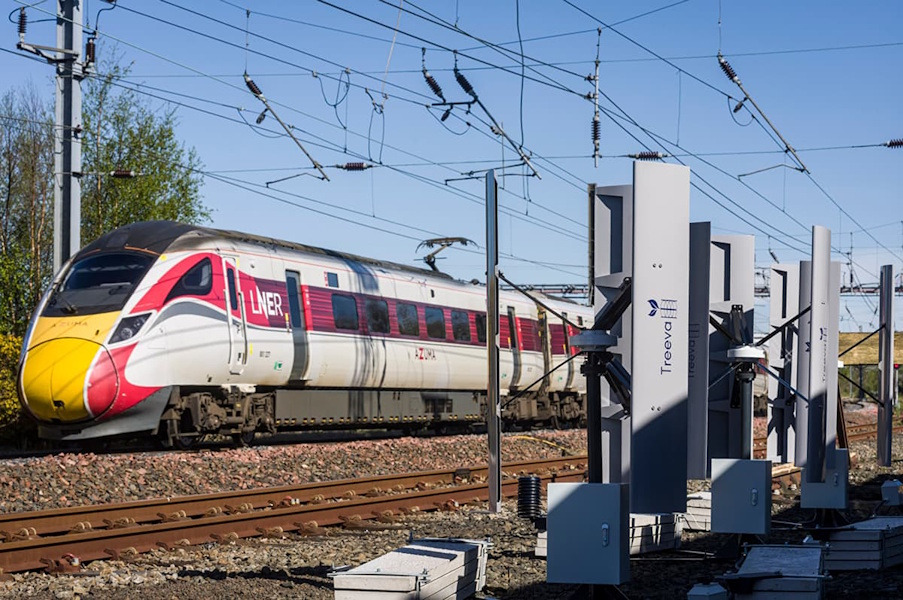

A new approach to generating renewable energy on the railway is being trialled in the UK, with London North Eastern Railway and clean energy firm Treeva testing technology that captures power from passing trains.
The pilot scheme has seen three compact wind turbines installed alongside the East Coast Main Line at Hitachi Rail’s Craigentinny depot in Edinburgh. Standing at around six feet tall and built using upcycled materials, the units are the first of their kind to operate next to a main line railway in the UK.
Unlike traditional renewable systems, the turbines do not require a connection to the national grid. Instead, they harness the turbulent airflow created by trains as they pass, converting it into usable electricity. The aim is to assess whether this energy can be reliably captured and used across the wider rail network.
Initial projections suggest the technology could have practical applications at stations and trackside locations. A single turbine is capable of generating enough electricity to power around a third of a small station’s lighting, operate several CCTV cameras, or run passenger information screens. A cluster of five turbines could cut more than 12,000 kilograms of carbon dioxide emissions annually, comparable to planting around 500 trees.
The project builds on Treeva’s involvement in the Future Labs innovation programme, which connects start-ups with train operators to develop solutions to industry challenges. Following earlier collaboration and recognition through the scheme, the partnership with LNER has now progressed to real-world testing.
The three turbines, given the names Sir Spins-a-Lot, AC Breezy and Windiana Jones by LNER staff, will remain in place for at least six months while performance data is gathered. The findings are expected to inform whether the concept can be expanded across Britain’s railway infrastructure.
Anjali Devadasan, CEO and co-founder of Treeva, said:
“Our goal is to transform the way transport infrastructure is powered. By capturing energy created by passing trains, we can turn unused land into a meaningful source of clean power and enable sustainable systems that pay for themselves within months. We’re excited and optimistic about this next step in our work with LNER and the wider rail industry, and we look forward to seeing the turbine results and exploring future opportunities.”
Mark Haymer, Innovation Product Owner at LNER, said:
“This is a really exciting next step in the project. Developing new ideas and solutions in any industry is always a challenge, but thanks to a strong partnership between Treeva, Hitachi, Network Rail, and LNER, we’ve delivered a successful and safe installation at Craigentinny. We’re looking forward to seeing how the turbines perform over the next six months. The data collected will shape the next stages of the project, supporting LNER and the other DFTO train companies to become zero-carbon operators, making rail an even greener choice.”
Image: LNER
Related Stories